Route 15 · Best Time to Visit La Gomera & El Médano
The best time to visit La Gomera and El Médano: weather month by month
The short answer: any month, because both areas are mild all year round. The longer answer depends on what you're after (walking, beaches, wind, a good price or escaping the northern winter), and here it is, based on official data from AEMET, the Canary Islands government and La Gomera's island council.
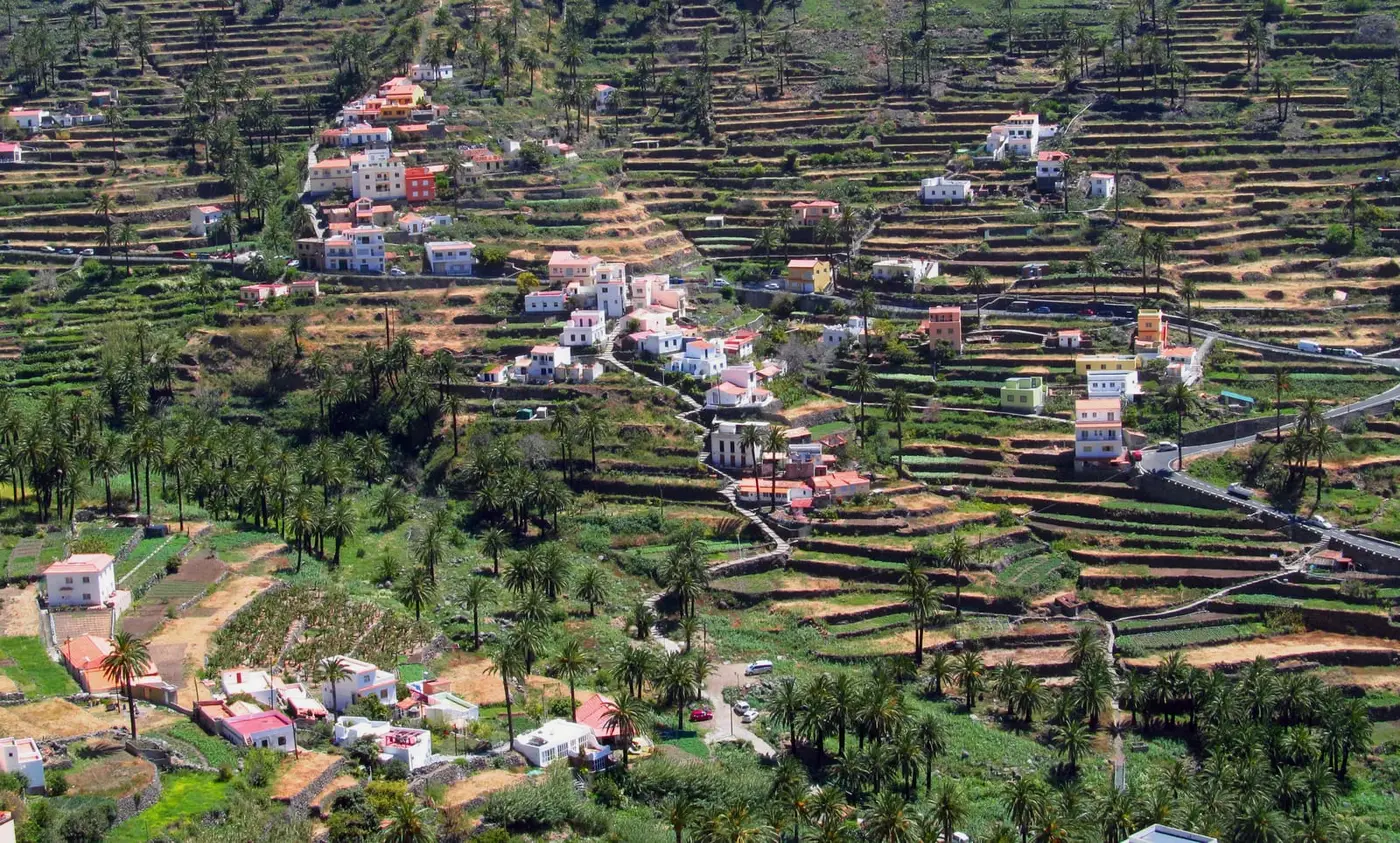
Photo: paciana · CC BY 3.0 · via Wikimedia Commons
When is the best time to visit La Gomera?
Any time. La Gomera's island council describes its climate as warm and mild with few changes, good for visiting in every season, and says the weather suits walking practically all year.
What changes is where you are. The north is a little cooler and more humid, because that's where the trade winds hit; the south, where Valle Gran Rey is, is sunnier and warmer. According to the Canary Islands government's Climate Atlas (1991-2020), the average annual temperature on the Valle Gran Rey coast is around 21°C, with about 170 mm of rain a year; up in the Garajonay highlands the average drops to about 14°C and rainfall tops 600 mm.
So even in the middle of winter, pack a warm layer and a rain jacket for the national park. Mist is normal up there and, as the island council points out, it's exactly what makes the forest so special.
And the best time to visit El Médano?
Also all year round, with one caveat: the wind. The south of Tenerife is dry: the AEMET weather station at Tenerife South airport, next to El Médano, records around 132 mm of rain a year, compared with 520 mm at Tenerife North airport.
The average high ranges from 21.7°C in January to 28.4°C in August, and the average low doesn't drop below 15°C in any month. The trade wind blows hardest from May to September, usually at 15-30 knots according to the Tenerife tourist board: perfect for kiting and windsurfing, less so for lying on the sand with a book. From October to April it's typically 10-25 knots.
El Médano weather by month
These are AEMET's climate normals (1981-2010) for Tenerife South airport, a few kilometres from El Médano: average high and low, average monthly rainfall and hours of sunshine. There's no official monthly series published for Valle Gran Rey, so for La Gomera we describe it in words.
- January: 21.7 / 15.2°C, 17 mm, 193 hours of sun. The coolest month; a good time for walking on La Gomera.
- February: 22.0 / 15.0°C, 20 mm, 195 h. Mild winter; the month when calima episodes tend to last longest.
- March: 23.1 / 15.6°C, 15 mm, 226 h. Longer days and more sunshine.
- April: 23.1 / 16.0°C, 7 mm, 219 h. Our low season begins.
- May: 23.9 / 17.0°C, 1 mm, 246 h. The summer trade wind picks up, still in low season.
- June: 25.4 / 18.8°C, 0 mm, 259 h. Steady wind and low season.
- July: 27.7 / 20.2°C, 0 mm, 295 h. The sunniest month, in the thick of the summer trade winds.
- August: 28.4 / 21.1°C, 1 mm, 277 h. The hottest month; windsurfing World Cup time at El Cabezo.
- September: 27.9 / 21.1°C, 4 mm, 213 h. Still warm, and low season again.
- October: 26.8 / 20.0°C, 12 mm, 214 h. The trade wind eases and a little rain returns.
- November: 24.8 / 18.2°C, 26 mm, 193 h. A good month to start a winter stay.
- December: 22.8 / 16.5°C, 30 mm, 195 h. The wettest month, with about 3.5 rainy days on average. 20 December to 6 January is our high season.
Is it warm in winter? La Gomera and El Médano in December to February
It's mild rather than hot. In January the average high at Tenerife South airport is 21.7°C and the average low 15.2°C, with around 193 hours of sunshine; between January and March there are on average about two days a month with 1 mm of rain or more.
On La Gomera, Valle Gran Rey is the sunniest and warmest part of the island. According to the island council, in winter the sun rises around 7:30 am and sets around 6:30 pm, so there's plenty of daylight for a walk and a swim.
One thing worth knowing about is calima: Saharan dust that turns the sky hazy yellow and makes the air drier. An AEMET study found that episodes last 1.8 days on average and that the longest ones usually happen in January and February. It won't spoil a trip, but on those days save the long hike for later.
When is it windiest?
In summer, and above all in El Médano. The north-easterly trade wind dominates in summer and hits El Médano's coast full on: from May to September it usually blows at 15-30 knots.
Valle Gran Rey is in the south-west of La Gomera, and the island council explains that the trade winds mainly affect the island's northern side. If you're looking for calm to swim and read, think of the valley; if you want wind for riding, El Médano in summer. Our kitesurfing and windsurfing guide has all the details.
When is it cheapest to stay? Our seasons
In our low season: April, May, June and September. High season runs from 20 December to 6 January, and the rest of the year is standard season. It's your arrival date that counts: the nightly rate depends on the season in which your stay begins.
Longer stays get an automatic discount on the accommodation: 10% from 15 nights and 20% from 30 nights, rising to 25% in low season. The final clean is €50 and there's no security deposit. You see the full breakdown before you send your request.
Which month should you choose?
Putting it all together, this is how we'd do it:
- Hiking on La Gomera: any month. In summer, set off early and carry plenty of water.
- Beach and calm swimming: Valle Gran Rey all year; in El Médano, Playa Chica and the town end of the main beach when it's windy.
- Kitesurfing and windsurfing: El Médano, May to September.
- Winter sun: November to March, making the most of the long-stay discount.
- Best prices: April, May, June and September.
- Whale and dolphin watching: all year. Short-finned pilot whales live permanently in La Gomera's waters, and trips leave from Vueltas harbour.
Where to stay
On La Gomera, in Valle Gran Rey: Mirador de Iguala and Retiro de Vueltas are in Vueltas, facing the sea by the harbour, each with two double bedrooms, sleeping 4, with everything within walking distance. Casa Mimo is up the valley in El Hornillo, for those who want peace and quiet; it's reached along a footpath of about 200 metres that isn't suitable for guests with reduced mobility.
In Tenerife, in El Médano: the Mirador Montaña Roja penthouse, a minute from the beach (fourth floor, no lift), for holidays; and Surfing View and La Jaquita for monthly stays, with a written temporary rental agreement signed before each stay and prices on request.
An idea that works well: combine both islands. Start in El Médano, 10-15 minutes from Tenerife South airport, then take the ferry from Los Cristianos to La Gomera (about 50 minutes) for the slower part of your trip.
Common questions
Is La Gomera warm in February?
It's mild. There's no official monthly series for Valle Gran Rey, but it's the sunniest and warmest part of the island; as a nearby reference, AEMET records an average February high of 22.0°C at Tenerife South airport.
Where is warmest in Tenerife in December?
The south is the drier, sunnier side. At Tenerife South airport, next to El Médano, the average December high is 22.8°C and the low 16.5°C (AEMET).
What is the cheapest month to go?
At our homes, the low-season months: April, May, June and September. Stay 30 nights or more and the accommodation discount is 25%.
Does it rain much in winter?
Not much in the south. At Tenerife South airport, December is the wettest month, with 30 mm on average and about 3.5 rainy days; the Valle Gran Rey coast gets around 170 mm a year.
When is the best time for hiking on La Gomera?
All year round, according to the island council. In summer, start early; in winter, bring a warm layer and a rain jacket for the Garajonay highlands, where mist is normal.
What is calima?
Dust carried over from the Sahara. An AEMET study found that each episode lasts 1.8 days on average, and the longest ones usually occur in January and February.
What time zone are the Canary Islands in?
The same as the UK and Ireland all year round, one hour behind Madrid, Paris or Berlin.
Where to stay
Our homes are spread across Tenerife and La Gomera, so almost all of these routes are a short drive away.
See homes in Valle Gran ReyOther routes
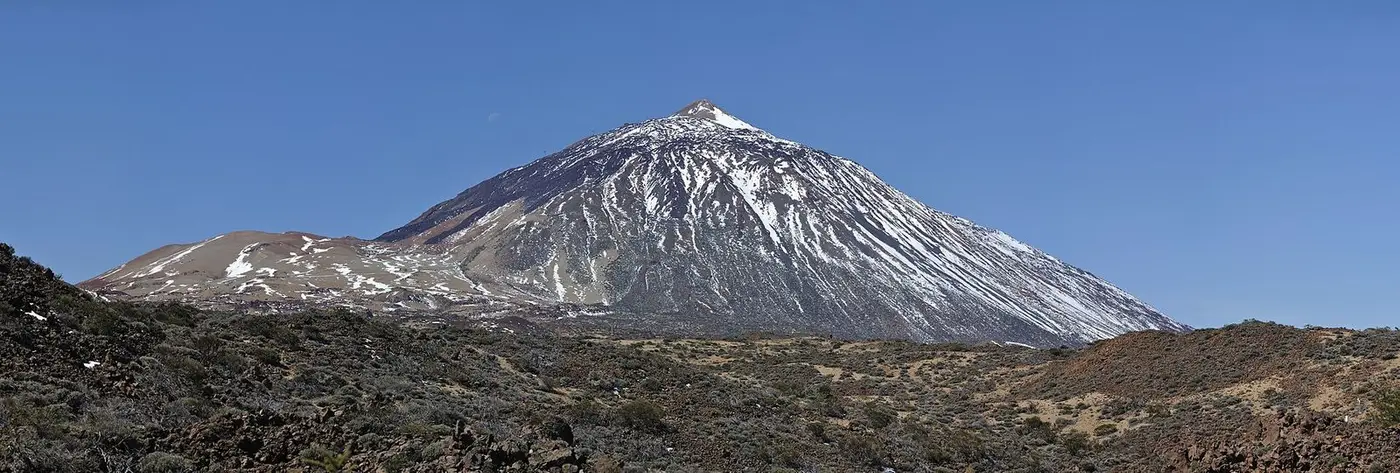
Route 01
The roof of Spain
There are places you visit and places you remember. Climbing Teide belongs to the second kind. At 3,715 metres, Teide dominates Tenerife and offers one of the most striking landscapes in the Canaries. To really enjoy it, it is worth planning the visit and giving it time.
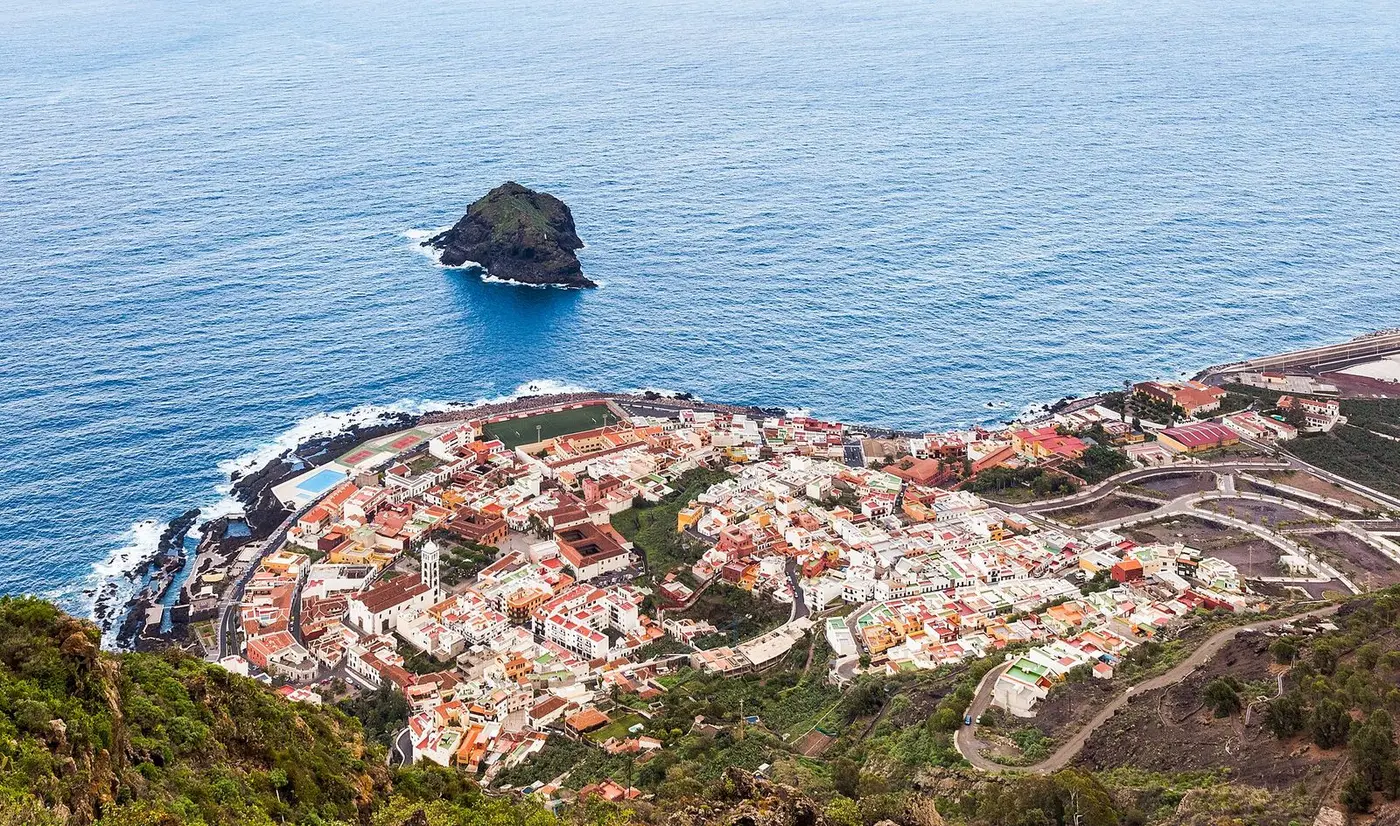
Route 02
The Tenerife many visitors never get to see
If you want to discover a greener, quieter, more authentic Tenerife, drive north. Historic towns, roads winding through banana plantations, cliffs, natural pools and some of the island's most spectacular scenery make this one of our favourite routes.
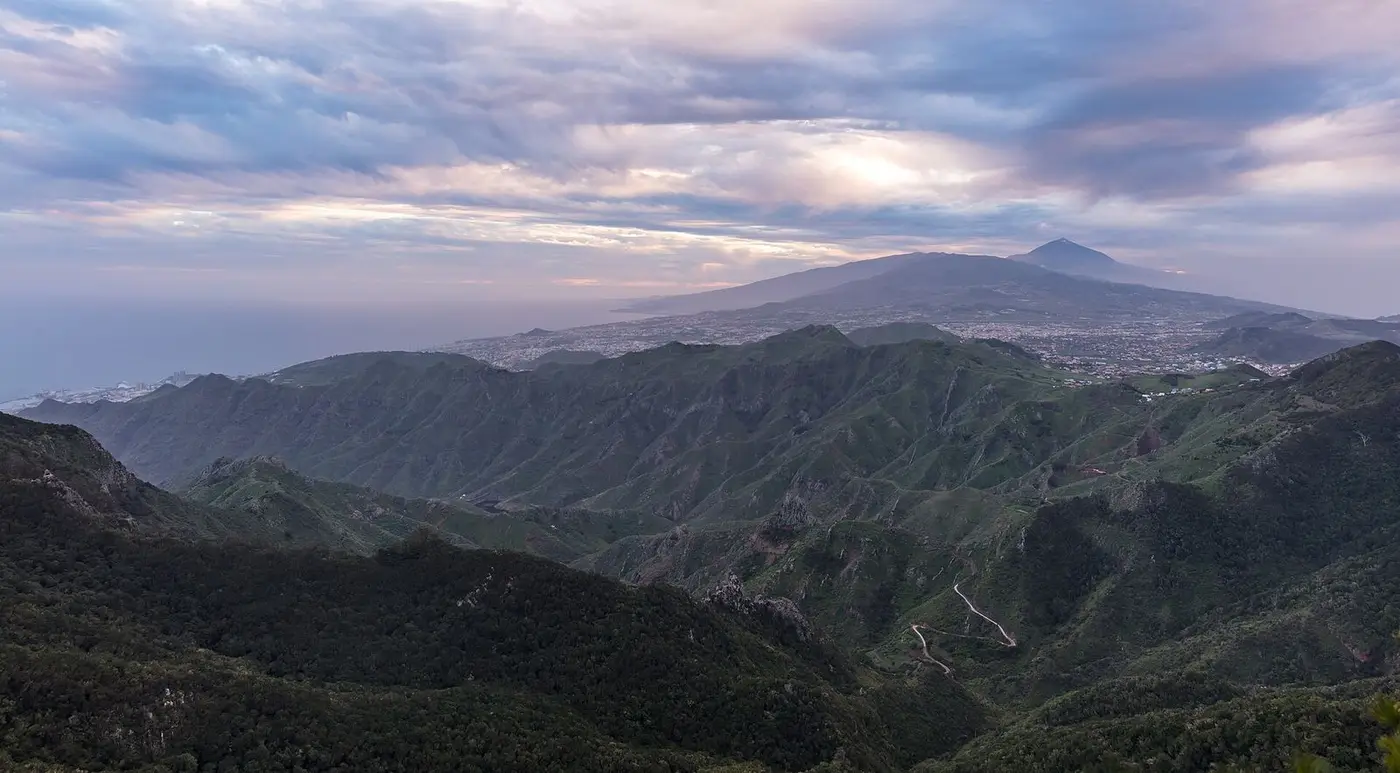
Route 03
The forest where Tenerife feels like another island
Anaga is one of those places you struggle to believe is in Tenerife. Mountains, mist, narrow roads, ravines and small villages hidden among the vegetation make up one of the most remarkable landscapes in the Canaries.